Testosterone Replacement Therapy (TRT) plans that are tailored to you and your specific needs starting as low as $79 month.
Additional Discounts can be applied, such as 3 month billing, 6 month billing, and First Responder discounts.
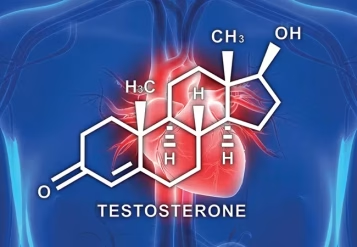
Testosterone is a hormone primarily produced in men that plays a critical role in:
- Sex drive (libido)
- Sperm production
- Heart health
- Muscle and bone mass
- Fat distribution and weight management
- Mood and energy
- Motivation
- Red blood cell production
TRT is a medical treatment used to restore healthy testosterone levels in individuals who have low or deficient testosterone. Testosterone replacement therapy can increase testosterone levels to bring back energy, vitality, physical strength, improved well-being, and many other benefits. Many times moderate testosterone levels can be mildly elevated with supplements, diet, and lifestyle. But for many men, the levels do not increase to the desired youthful levels. A personalized approach with consideration of your personal preferences and goals will be designed to restore your energy levels and vitality.
Get Started today by Contacting us at : 320.889.0825
Contact for Appointment : Contact@revivalwellnessminnesota.com
More to learn about Testosterone and Your health!
Cardiovascular Safety
The TRAVERSE trial (N=5,246; mean follow-up 33 months) — the largest and most definitive RCT on this question — enrolled men at high cardiovascular risk and found that TRT was noninferior to placebo for MACE (HR 0.96; 95% CI 0.78–1.17), with no increase in cardiovascular death (HR 0.84; 95% CI 0.63–1.12) or all-cause mortality (HR 0.98; 95% CI 0.78–1.23). [1] The Androgen Society position paper concluded that it has been “conclusively determined” that TRT is not associated with increased risk of heart attack, stroke, or cardiovascular death, based on TRAVERSE plus multiple additional RCTs, observational studies, and 19 meta-analyses.
Decreased Risk of Death!
Epidemiological data show that men with very low endogenous testosterone (<7.4 nmol/L or ~213 ng/dL) have higher all-cause mortality, and those below ~5.3 nmol/L (~153 ng/dL) have higher cardiovascular mortality. [4] A meta-analysis of observational studies using time-dependent hazard ratios found that TRT-treated hypogonadal men had lower all-cause mortality compared with untreated men (HR 0.70; 95% CI 0.54–0.90), without increased cardiovascular events. [5] However, RCTs have not been powered to confirm a mortality benefit. The ACP evidence review found a trend toward fewer deaths with TRT (Peto OR 0.47; 95% CI 0.25–0.89) but graded this as low-certainty evidence with insufficient data for definitive conclusions.
No increased risk of prostate cancer !
The review details prostate cancer outcomes across three landmark trials. In the TRAVERSE trial (the largest RCT of TRT, mean follow-up 33 months), prostate cancer was diagnosed in 12 of 2,596 men in the testosterone group (0.46%) versus 11 of 2,602 in the placebo group (0.42%). High-grade prostate cancer (Gleason ≥4+3) occurred in 5 men (0.19%) on testosterone versus 3 (0.12%) on placebo. In the T Trials (24 months of observation), prostate cancer was diagnosed in 3 of 335 testosterone-treated men (0.9%) versus 1 of 318 placebo-treated men (0.3%). In the T4DM trial, 4 of 504 testosterone-treated men (0.8%) versus 5 of 503 placebo-treated men (1%) were diagnosed with prostate cancer over 2 years. None of these differences were statistically significant. [1]
TRAVERSE Trial — Prostate Safety Analysis (2023)
The dedicated prostate safety analysis of the TRAVERSE trial (n = 5,204 men, aged 45–80, with hypogonadism and CVD or CVD risk factors) confirmed that among men with baseline PSA <3.0 ng/mL, the incidences of high-grade prostate cancer (HR 1.62; 95% CI 0.39–6.77; P = .51), any prostate cancer, acute urinary retention, invasive BPH procedures, and new pharmacologic treatment for LUTS did not differ significantly between TRT and placebo groups. [2] The following forest plot from this analysis illustrates these findings:
SPIRIT Trial — TRT in Prostate Cancer Survivors (2026)
The SPIRIT trial, published in JAMA Internal Medicine in May 2026, is the first randomized, placebo-controlled trial of TRT in prostate cancer survivors. Among 136 men with low-grade prostate cancer (Gleason 6 or 7 [3+4]) who had undergone radical prostatectomy and had undetectable PSA for ≥2 years, 12 weeks of testosterone cypionate 100 mg IM weekly significantly improved sexual activity, sexual desire, body composition, physical function, and aerobic performance compared to placebo. Critically, no participant in either group experienced biochemical recurrence (PSA ≥0.2 ng/mL). However, the trial was short, and findings do not apply to men with high-grade prostate cancer or those treated with ADT or radiation.
Short-term TRT is safe and efficacious in improving sexual and physical function in men with low-grade prostate cancer and hypogonadism treated with radical prostatectomy; however, the trial was neither long enough nor large enough to evaluate clinical recurrence or long-term safety.
Large Medicare Cohort Study (2025)
A propensity score–matched retrospective cohort study of 546,964 hypogonadal men aged ≥65 using Medicare data (2007–2020) found that TRT was associated with a 16% reduction in the hazard of prostate cancer (HR 0.84; 95% CI 0.82–0.86), with reductions observed across long-term, short-term, parenteral, and topical use. Conversely, TRT was associated with a modest 13% increase in BPH risk (HR 1.13; 95% CI 1.11–1.14), with parenteral routes carrying higher BPH risk than topical. [4]
Meta-Analysis of 41 RCTs (2026)
A systematic review and meta-analysis of 41 RCTs (n = 11,161) published in 2026 found that TRT was not associated with a statistically significant increase in prostate cancer events (OR 0.88; 95% CI 0.52–1.51; I² = 0%) or clinically significant prostate cancer (OR 1.13; 95% CI 0.39–3.26; I² = 0%). The authors concluded that current evidence supports the short- to mid-term safety of TRT, though long-term data remain necessary. [5]
Systematic Review of TRT in Localized Prostate Cancer (2025)
A systematic review of 19 observational studies evaluating TRT in men with localized prostate cancer found low biochemical recurrence rates: 0–7% post-radical prostatectomy and 0–6% post-radiotherapy with up to 60 months of follow-up. Progression rates on active surveillance ranged from 0–32% and did not differ significantly from non-exposed controls. The authors support cautious use of TRT in low-to-intermediate-risk disease on active surveillance and favorable localized disease post-definitive treatment, with diligent patient selection and monitoring. [6]
Finnish Population-Based Study (2023)
A study of 78,615 men from the Finnish Randomized Study of Screening for Prostate Cancer (FinRSPC) with 18 years of follow-up found that TRT users did not have higher prostate cancer incidence and actually had lower prostate cancer mortality (HR 0.52; 95% CI 0.3–0.91) compared to non-users. [7]
Key Takeaways
The cumulative evidence from recentstudies consistently indicates that TRT does not increase prostate cancer risk in the short to mid term in appropriately screened men. However, men at high risk for prostate cancer were excluded from the major trials, and TRT does raise PSA levels, which may lead to increased detection of clinically insignificant disease.
Established Benefits on Morbidity
- Sexual function: Small but statistically significant improvements in libido (SMD 0.17), erectile function (SMD 0.16), and sexual satisfaction (SMD 0.16). [7-8]
- Body composition: Consistently increases lean body mass and decreases fat mass across trials. [2][9-10]
- Bone density: Increases volumetric and areal BMD at the spine and hip, with effects predominantly on cortical bone over 2 years. However, the TRAVERSE trial paradoxically found an increased fracture risk despite structural improvements. [2][7][11]
- Anemia: Corrects anemia in a substantial proportion of hypogonadal men, with hemoglobin increments >1 g/dL. [7]
- Mood and energy: Slight improvements in depressive symptoms and vitality, though effects are small (SMD ~0.17–0.19). [2][6]
- Diabetes prevention: The T4DM trial showed a 40% reduction in type 2 diabetes risk when TRT was combined with a lifestyle program in men with prediabetes. However, the TRAVERSE diabetes substudy found no glycemic benefit from TRT alone without lifestyle intervention.
References:1.Cardiovascular Safety of Testosterone-Replacement Therapy.The New England Journal of Medicine. 2023. Lincoff AM, Bhasin S, Flevaris P, et al.RCT
2.Testosterone Treatment in Middle-Aged and Older Men with Hypogonadism.The New England Journal of Medicine. 2025. Bhasin S, Snyder PJ.NewReview
3.Androgen Society Position Paper on Cardiovascular Risk With Testosterone Therapy.Mayo Clinic Proceedings. 2024. Morgentaler A, Dhindsa S, Dobs AS, et al.Review
4.Associations of Testosterone and Related Hormones With All-Cause and Cardiovascular Mortality and Incident Cardiovascular Disease in Men : Individual Participant Data Meta-Analyses.Annals of Internal Medicine. 2024. Yeap BB, Marriott RJ, Dwivedi G, et al.SR
5.Cardiovascular Morbidity and Mortality in Men – Findings From a Meta-Analysis on the Time-Related Measure of Risk of Exogenous Testosterone.The Journal of Sexual Medicine. 2022. Fallara G, Pozzi E, Belladelli F, et al.SR
6.Testosterone Treatment in Adult Men With Age-Related Low Testosterone: A Clinical Guideline From the American College of Physicians.Annals of Internal Medicine. 2020. Qaseem A, Horwitch CA, Vijan S, et al.Guideline
7.Testosterone Therapy in Men With Hypogonadism: An Endocrine Society Clinical Practice Guideline.The Journal of Clinical Endocrinology and Metabolism. 2018. Bhasin S, Brito JP, Cunningham GR, et al.Guideline
8.The Efficacy and Adverse Events of Testosterone Replacement Therapy in Hypogonadal Men: A Systematic Review and Meta-Analysis of Randomized, Placebo-Controlled Trials.The Journal of Clinical Endocrinology and Metabolism. 2018. Ponce OJ, Spencer-Bonilla G, Alvarez-Villalobos N, et al.
9.Safety and Efficacy of Testosterone Therapy on Musculoskeletal Health and Clinical Outcomes in Men: A Systematic Review and Meta-Analysis of Randomized Placebo-Controlled Trials.Endocrine Practice : Official Journal of the American College of Endocrinology and the American Association of Clinical Endocrinologists. 2023. Buratto J, Kirk B, Phu S, Vogrin S, Duque G.SR
10.Testosterone Treatment to Prevent or Revert Type 2 Diabetes in Men Enrolled in a Lifestyle Programme (T4DM): A Randomised, Double-Blind, Placebo-Controlled, 2-Year, Phase 3b Trial.The Lancet. Diabetes & Endocrinology. 2021. Wittert G, Bracken K, Robledo KP, et al.RCT
11.Effect of Testosterone Treatment on Bone Microarchitecture and Bone Mineral Density in Men: A 2-Year RCT.The Journal of Clinical Endocrinology and Metabolism. 2021. Ng Tang Fui M, Hoermann R, Bracken K, et al.RCT
12.Effect of Testosterone on Progression From Prediabetes to Diabetes in Men With Hypogonadism: A Substudy of the TRAVERSE Randomized Clinical Trial.JAMA Internal Medicine. 2024. Bhasin S, Lincoff AM, Nissen SE, et al.Opinion
13.Efficacy and Safety of Testosterone Treatment in Men: An Evidence Report for a Clinical Practice Guideline by the American College of Physicians.Annals of Internal Medicine. 2020. Diem SJ, Greer NL, MacDonald R, et al.Guideline
14.Society for Endocrinology guidelines for testosterone replacement therapy in male hypogonadism.Clinical Endocrinology. 2022. Jayasena CN, Anderson RA, Llahana S, et al.
15.Testosterone Replacement in Men With Sexual Dysfunction.The Cochrane Database of Systematic Reviews. 2024. Lee H, Hwang EC, Oh CK, et al.
Prostate references
1.Testosterone Treatment in Middle-Aged and Older Men with Hypogonadism.
The New England Journal of Medicine. 2025. Bhasin S, Snyder PJ.NewReview
JAMA Network Open. 2023. Bhasin S, Travison TG, Pencina KM, et al.RCT
3.Testosterone Treatment in Prostate Cancer Survivors With Hypogonadism.
JAMA Internal Medicine. 2026. Bhasin S, Burnett AL, Gagliano-Jucá T, et al.NewRCT
The Journal of Clinical Endocrinology and Metabolism. 2025. Baik SH, Baye F, Fung KW, Xian H, McDonald CJ.New
International Journal of Impotence Research. 2026. García-Becerra CA, Arias-Gallardo MI, Juárez-García JE, et al.NewReview
BJU International. 2025. Santucci J, Stapleton P, Perera M, et al.NewReview
Acta Oncologica. 2023. Siltari A, Murtola TJ, Kausz J, et al